-
- EN
-
-

Your brand already has a fit standard, a defined customer, and a reputation to protect. What you need next may be a limited-edition sweatshirt, a regional fanwear collection, or a controlled retail test - not another full-volume seasonal commitment.
The problem is finding a factory that treats a smaller order with the same discipline as your core collection. A low minimum offers little value if the fabric changes after approval, the size assortment arrives incorrectly, or a repeat order no longer matches the original fit.
A low MOQ clothing manufacturer should help you reduce inventory exposure while maintaining agreed product specifications, inspection requirements, and approval controls. For established buyers, the purchasing decision is about how much you can commit without compromising the product or disrupting your supply chain.
In this guide, "major league quality" means disciplined execution against a demanding buyer's requirements. It is not a universal certification or a promise that every garment meets an identical league standard. The practical test is whether your manufacturing partner can document what was approved, reproduce it within agreed tolerances, and manage the next order consistently.
MOQ means minimum order quantity: the smallest quantity a manufacturer accepts under a defined set of production conditions. A low MOQ is relative to the garment, materials, customization, and way the order is divided. There is no single quantity that qualifies across every apparel program.
For procurement teams, the most important question is not simply "How low is the minimum?" It is "What does that minimum apply to?"
Before comparing suppliers, separate these requirements:
Order minimum: The total quantity needed to open a production order.
Style minimum: The quantity required for each distinct garment design or construction.
Color or fabric minimum: The quantity needed for a particular material, dye lot, or finish.
Decoration minimum: Any separate requirement for each print, embroidery design, or application.
Size assortment rules: How the accepted quantity can be distributed across sizes.
A factory may accept a relatively small garment order while a custom fabric or branded trim still carries a larger purchasing minimum. Clarify whether you will pay for unused materials, who owns them, and how long they can be stored for reorders.
A useful question for clothing manufacturers with low MOQ is: "Please quote the minimum for this exact style, fabric, color split, and decoration—not only your lowest advertised quantity."
A smaller quantity reduces the number of garments. It does not remove the work required to approve a pattern, prepare materials, set up decoration, verify measurements, and release a shipment.
That creates three challenges for experienced buyers.
Pattern development, sampling, setup, and inspection preparation still require resources. A small batch can therefore have a higher unit price even when it reduces your total inventory commitment.
A lower unit price tied to an unnecessarily large order may produce a worse result than a carefully planned smaller run.
A sample made from available stock fabric does not automatically establish a repeatable supply. If that fabric cannot be reordered, a later batch may require a different source, finish, or dye lot.
A modest order split across several colors, sizes, and artwork versions can be operationally complex. The risk is not limited to sewing quality: incorrect labels, mixed artwork, and inaccurate carton assortments can also delay retail distribution.
Low MOQ clothing production works best when flexibility is supported by clear specifications and disciplined change control.
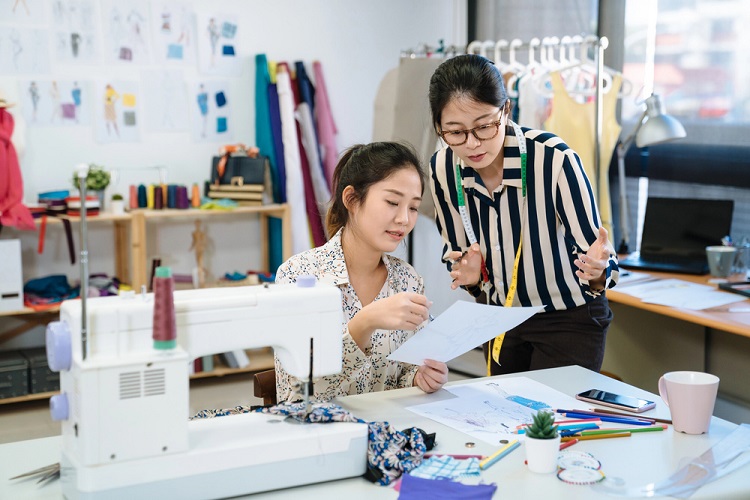
For established businesses, smaller production runs serve specific commercial objectives. The strongest use cases connect a limited commitment to a clear buying decision.
A brand with proven demand for T-shirts may want to test a heavyweight crewneck or a new jacket silhouette. A controlled run can assess fit feedback, return reasons, and sell-through before a wider assortment is approved.
Your existing brand standards serve as the baseline. A controlled run provides the exact data needed to justify a reorder, a product revision, or a withdrawal from the range.
A licensed apparel program may need separate artwork for a particular team, territory, retailer, or event. Demand for each variation may be smaller than the overall program volume.
For these buyers, a lower minimum is valuable only when artwork approvals, required labeling, and delivery windows remain controlled. Relevant licensed sports apparel manufacturing capabilities should support the particular program and its approval requirements.
An established retailer may test a capsule collection in selected stores before extending distribution. A distributor may need to validate a customer-specific assortment before committing to a larger buy.
The order should be large enough to provide useful demand signals across the selected locations and sizes. An extremely fragmented assortment can run out in key sizes before the test produces a meaningful result.
A pilot order can help assess whether a prospective supplier follows specifications, communicates changes, and completes packing accurately before receiving more business.
Evaluate the production records and exception handling alongside the finished garments. A successful pilot should demonstrate a repeatable process, not just an attractive sample.
Small batches can help replenish selected styles or sizes without rebuilding the entire seasonal inventory. However, a low MOQ does not automatically mean a short lead time.
We verify fabric availability, decoration setup, and production capacity upfront, so you can confidently promise a replenishment date to your sales team.
Choosing a low MOQ manufacturer isn't about finding the cheapest workshop. It's about finding a factory you won't outgrow in six months. We run your small batch on the exact same production lines trusted by major pro sports leagues. We give you the flexibility you need for your first run, with the firepower you'll need when your brand blows up.
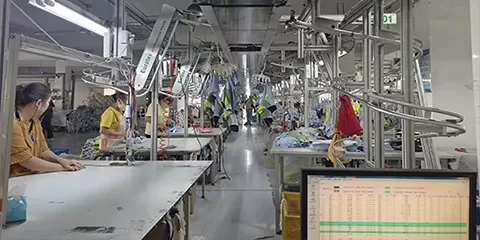
We combine a self-owned factory of 10,000 square meters with over 40 years of knit cut and sew production experience and 17 years of licensed apparel experience. Its manufacturing offer covers development, fabric sourcing, garment production, decoration, inspection, and packaging. Explore Champolian's manufacturing capabilities.
For an established buyer, the relevance is the connection between a small production commitment and a broader manufacturing program.
Champolian's in-house cut-and-sew services brings sampling and bulk manufacturing under one roof. Its stated low-minimum structure includes 72 pieces per team or colorway. Before you issue a purchase order, we clarify exactly how that structure applies to your specific garment, materials, artwork, and assortment.
The practical starting point is a review of your existing specifications. For a repeat style, identify which elements must remain unchanged and which changes are open for development. For a new collection, establish the approval baseline before scheduling production.
To ensure every small batch meets your established brand standards, our production process is built around four strict manufacturing controls:
A defined product baseline. We lock in the garment specification, measurements, tolerances, materials, artwork, and labeling requirements together.
Production-representative samples. We ensure all components and processes match the planned run. Record and resolve any differences before release.
Inspection and acceptance criteria. We align with your QC team on what will be checked, when it will be checked, and how failed checks will be handled.
A repeat-order reference. We save the approved specification revision and retained reference materials to be used when replenishment is ordered.
Champolian's apparel quality assurance process includes fabric inspection and checks through cutting, sewing, decoration, final inspection, and packing. We discuss which tests and reports your program requires, rather than treating a general quality statement as an order-specific acceptance plan.
Material decisions also affect flexibility. Review fabric selection options against both the first batch and likely repeat demand. Fleece, French terry, jersey, and pique serve different product briefs; selecting a fabric should account for hand feel, performance requirements, and supply continuity as well as minimums.
The goal is to keep the approved product definition consistent as order quantities change. We confirm the actual materials, production arrangements, pricing, and lead time with you for each subsequent order.
An initial run is rarely just about the immediate quantity; it is a commercial test for future replenishment. As a manufacturing partner, our goal is to ensure the first batch provides you with accurate data, and the factory is prepared when you are ready to scale.
Rather than defaulting to our absolute minimum, we encourage sourcing teams to share the broader context of the pilot order. To set up a scalable supply chain, it helps us to know:
The planned test window: When do you need the goods in-store to gather meaningful sell-through data?
The reorder trigger: What is the expected lead time if the test is successful and you need to restock quickly?
Material continuity: Will this exact fabric and dye lot need to be reserved or re-sourced for the next larger run?
By aligning on these points before the first pattern is cut, we avoid the common trap of low-MOQ production: successfully delivering a small batch, only to face material shortages or capacity delays when the real volume hits. We create the option to commit in stages, ensuring your supply chain remains uninterrupted as demand grows.
An accurate quote needs a defined manufacturing scope. "Please quote 300 hoodies" leaves important assumptions unresolved, even when the buyer and factory both have extensive experience.
Send a consolidated brief containing:
Product and commercial purpose: Identify the garment, intended channel, and whether the run is a capsule, replenishment order, retail test, or supplier qualification order.
Tech pack and revision: Include construction details, graded measurements, tolerances, and dated revisions. For an existing product, provide an approved reference sample where possible.
Material requirements: State composition, target weight, finish, color reference, performance requirements, and whether proposed alternatives can be reviewed.
Quantity matrix: Break down units by style, color, size, and artwork version. Separate the committed purchase from any forecast of future demand.
Decoration requirements: Supply usable artwork, placement measurements, dimensions, color references, and the intended process.
Labels and retail packing: Include brand labels, care information, barcodes, folding instructions, individual packaging, and carton assortments.
Quality and approval requirements: Specify required tests, inspection arrangements, approval responsibilities, and applicable retailer or licensing requirements.
Delivery and commercial terms: Provide the destination, required delivery date, preferred shipping arrangement, and requested quotation basis or Incoterm.
Request a quote that separates development, production, testing, packaging, and logistics costs where applicable. Ask the supplier to list exclusions and assumptions, including any materials purchased beyond the garment quantity.
Choosing a low MOQ clothing manufacturer is a decision about production control and inventory commitment. Established brands need a partner that can execute a limited run against existing standards and support a larger order when demand warrants it. By aligning on specifications, approval responsibilities, and replenishment conditions before production begins, we ensure your next buying decision builds on a documented, repeatable process.
Planning a limited collection, retail test, or targeted replenishment order? Send Champolian your tech pack, quantity matrix, quality requirements, and delivery target to discuss MOQ eligibility, material options, and a production quotation.
A low MOQ clothing manufacturer accepts smaller production quantities under defined conditions for styles, fabrics, colors, and customization. Established brands use these suppliers for limited collections, retail tests, replenishment, and supplier qualification. Buyers should confirm both the total order minimum and any separate minimums for materials, decoration, or individual variants.
There is no universal cutoff for a low MOQ in clothing manufacturing. The practical minimum depends on garment construction, fabric sourcing, dyeing, decoration, and the order breakdown. Compare suppliers using the same product specification and quantity matrix; a per-color minimum cannot be compared directly with an order-wide minimum.
Clothing manufacturers set minimum order quantities to cover production preparation and meet material purchasing requirements. Pattern work, cutting setup, decoration setup, and quality checks require resources even for a small run. Custom fabrics, colors, and trims may have separate minimums that influence the smallest commercially workable garment order.
A low MOQ manufacturer is defined by the minimum quantity it accepts. A small batch clothing manufacturer is described by the scale of the production runs it handles. The terms overlap, but neither establishes quality or repeat-order capacity. Evaluate the supplier's specifications, approval process, production controls, and replenishment arrangements for your program.